Why Commercial Inspections Matter
By Fred Rodrigues, Certified Master Inspector and Member of Certified Commercial Property Inspectors Association, with thousands of inspections completed in Florida.
Key Takeaways on Commercial Real Estate Inspections
This article delves into the critical importance of commercial property inspections. It highlights five core reasons to commission a pre-purchase inspection: mitigating financial risks, ensuring code compliance and safety, empowering negotiation, protecting asset value, and gaining a comprehensive understanding of property condition. We also explore the risks of skipping an inspection and touch upon modern inspection trends. A thorough inspection is presented not as a cost, but as a strategic investment that safeguards against unforeseen liabilities and enhances long-term asset performance.
Commercial property inspections are a structured, specialist review identifying hidden defects, verifying code compliance, and quantifying repair costs to protect investment decisions. Combining visual assessment, instrumented testing, and targeted specialist scopes, inspections reveal issues missed by ordinary walkthroughs, producing a report vital for underwriting and negotiation. Investors, lenders, and buyers use these findings to reduce financial exposure, ensure safety, and set realistic capital expenditure (CapEx) projections. This article details the five core reasons for a pre-purchase commercial inspection, what inspectors evaluate, and how findings translate into negotiation leverage, compliance, and long-term asset protection. We also cover the risks of skipping an inspection, emphasizing its strategic investment value.
Why Is Mitigating Financial Risks a Key Reason for Commercial Property Inspections?

Mitigating financial risk is central to commercial inspections. They identify concealed defects that could become large, unplanned capital expenditures and provide cost estimates crucial for ROI and underwriting. By revealing issues like roof failures, structural deficiencies, major mechanical system problems, and environmental liabilities, inspections convert uncertainty into quantifiable risk metrics. Reports include condition assessments and repair cost ranges, allowing buyers and lenders to set contingencies, escrow holds, or request seller remedies, thus avoiding catastrophic surprises and ensuring purchase terms reflect the asset’s true condition.
The most common hidden defects and their typical financial impact include:
- Roof degradation: Significant leaks or failing membranes can require immediate replacement, often costing tens to hundreds of thousands depending on building size.
- Foundation/structural issues: Cracks, settlement, or load-path problems can trigger repairs or engineered solutions costing from low five figures to well over six figures.
- HVAC and major mechanical failure: End-of-life chillers or boilers can necessitate replacement and downtime costs that materially alter operating expenses.
- Environmental hazards: Asbestos, underground storage tanks, or mold remediation can create multi-decade liabilities and cleanup expenses that affect valuation.
What Hidden Defects Can Commercial Inspections Reveal?
Commercial inspections uncover structural, system-level, and environmental defects not obvious on casual visits. Structural findings (foundation settlement, compromised roof framing) impact safety and insurance. Mechanical systems often hide deferred maintenance (corroded piping, inefficient HVAC), increasing operating expenses. Environmental discoveries (mold, asbestos, underground tanks) create regulatory obligations and significant remediation costs. These highlight the inspection’s depth and need for specialist follow-up, informing repair cost estimates and negotiations.
How Do Inspections Help Avoid Unexpected Repair Costs?
Inspections translate defects into preliminary repair budgets and prioritized CapEx lists, allowing buyers to plan spending and avoid post-closing surprises. Inspectors provide condition grades, lifecycle estimates, and cost ranges for repairs, enabling buyers to request seller credits, escrow holdbacks, or adjusted pricing. Documented estimates support lender underwriting and help model net operating income (NOI). Specialist testing refines budgets and reduces underestimated costs. These estimates influence negotiation and lead into compliance and safety verification.
How Do Commercial Inspections Ensure Code Compliance and Safety?
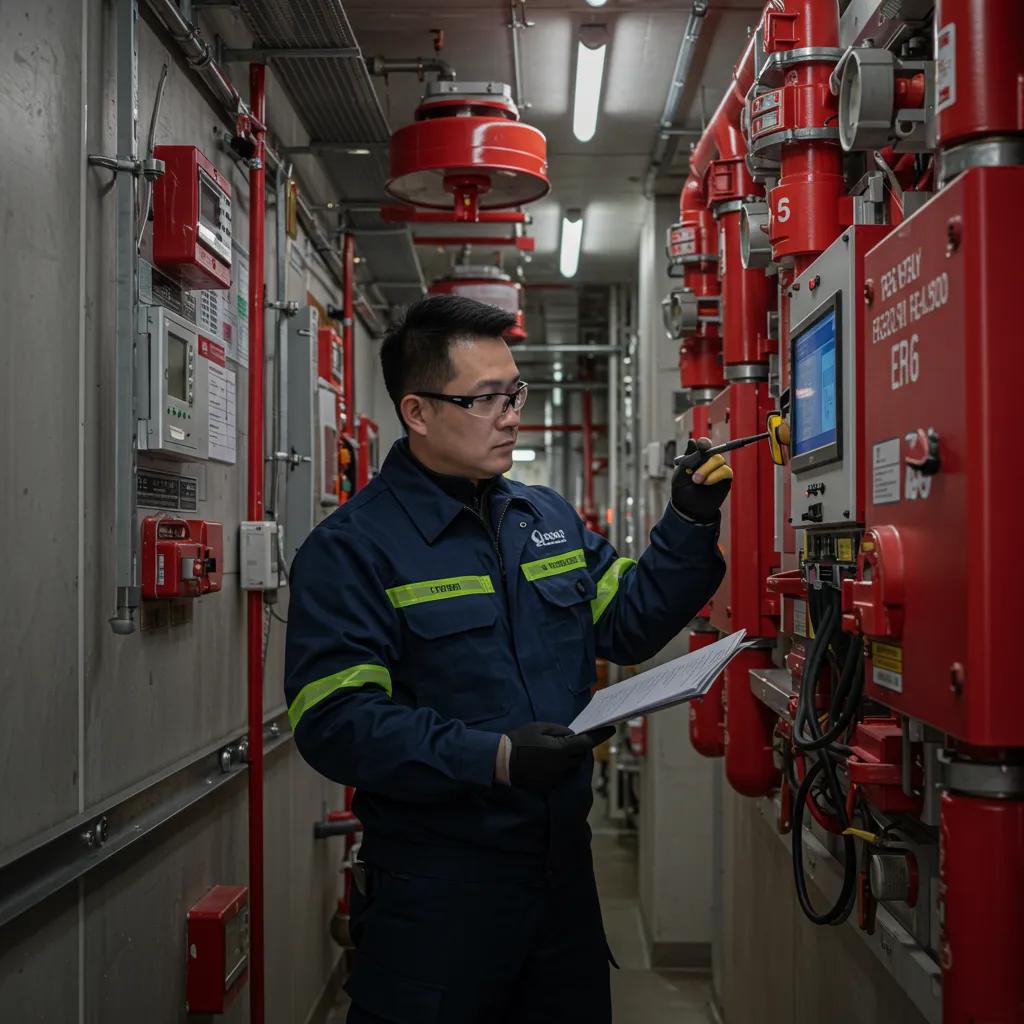
Commercial inspections verify buildings conform to fire, electrical, accessibility, and occupancy regulations, identifying safety hazards that could lead to fines, insurance issues, or forced closure. Inspectors check systems against current code expectations—like fire suppression, emergency egress, electrical capacity, and ADA features—reporting deficiencies. Ensuring compliance reduces liability, supports insurability, and expedites permitting, protecting revenue and occupancy timelines.
Key code and regulation categories typically reviewed:
- Fire and life-safety systems: Inspectors verify sprinkler function, fire alarm systems, means of egress, and emergency lighting to reduce fire risk and liability.
- Electrical code compliance: Distribution panels, grounding, circuit capacities, and conduit conditions are checked to prevent shock hazards and outages.
- Accessibility (ADA) and occupancy zoning: Facility entries, restroom accessibility, and occupancy classifications are evaluated to ensure legal use and avoid fines.
Which Building Codes and Regulations Are Verified During Inspections?
Professionals cross-reference conditions with code frameworks to identify noncompliance. Fire codes and life-safety standards (sprinkler systems, alarms, egress routes) are primary, as failures can result in immediate closure or heavy fines. Electrical inspections evaluate load capacity, panel labeling, and wiring methods, impacting insurance and tenant safety. Accessibility and occupancy zoning checks ensure alignment with municipal permits and ADA requirements. Potential code violations often lead to specialist reviews (e.g., licensed electricians) for remediation scopes and cost estimates, emphasizing early identification of safety hazards.
What Safety Hazards Are Identified in Commercial Property Assessments?
Commercial assessments flag various safety hazards, from immediate life-safety risks to long-term environmental exposures. Electrical hazards (overloaded panels, exposed conductors) risk fire and injury, often requiring urgent remediation. Structural hazards (water intrusion, compromised roof decks, settlement) can threaten occupancy and lead to temporary closure. Environmental hazards (mold, asbestos, contamination) create regulatory and health liabilities requiring specialized remediation. Prioritizing these helps buyers and asset managers sequence remediation, minimize disruption, and align insurance and permitting.
How Do Commercial Property Inspections Empower Negotiation and Investment Decisions?
Commercial inspections empower negotiations by converting condition findings into concrete options: price adjustments, seller-performed repairs, escrow reserves, or contract termination rights. The inspection report, detailing documented defects, estimated repair costs, and prioritization, becomes a powerful negotiation tool, allowing buyers to request specific remedies instead of accepting unseen liability. Inspections also inform investment decisions by providing data for underwriting, cash-flow projections, and exit strategies, reducing uncertainty and protecting expected returns.
Common negotiation outcomes after inspection findings:
- Price reduction: Buyers request a lower purchase price based on verified repair cost estimates to preserve expected ROI.
- Seller repairs before closing: Targeted repairs—such as fixing code violations or mechanical failures—are negotiated into the contract timeline.
- Escrow holdback or repair credit: Funds are held in escrow for post-closing remediation when immediate repair before closing is impractical.
How Can Inspection Reports Influence Purchase Price Negotiations?
Inspection reports influence price negotiations by providing third-party documentation and cost estimates for required repairs, creating objective grounds for adjustment. Findings are converted into repair bids, which buyers use to justify price reductions, seller-performed repairs, escrow holdbacks, or even termination if issues exceed materiality thresholds. Well-documented reports reduce disputes by presenting transparent evidence of condition, enabling pragmatic negotiation. A clear inspection report shifts bargaining power and informs lender underwriting and final investment commitment decisions.
Why Is Informed Decision-Making Critical in Commercial Real Estate Purchases?
Informed decision-making reduces uncertainty by integrating inspection data into underwriting, lender conditions, and asset management planning. This allows investors to make risk-adjusted choices regarding acquisition, financing, and repositioning. Lenders often require condition documentation or remedial plans, with inspection findings influencing loan-to-value calculations and reserve requirements. For investors, CapEx forecasts from inspections affect hold vs. sell decisions, value-add strategies, and expected returns, reducing post-closing surprises. Ultimately, inspection information strengthens investor confidence and clarifies exit strategies, making it critical for sound commercial real estate acquisition.
In What Ways Do Inspections Protect Your Commercial Property Investment and Asset Value?
Inspections protect investment and asset value through early detection and remediation of issues that accelerate depreciation, informed maintenance and CapEx planning, and documentation supporting resale, financing, and leasing. A documented condition baseline reduces lifecycle costs by preventing minor issues from escalating and enabling scheduled replacements. Inspections also enhance marketability: detailed reports build confidence for buyers and lenders, accelerate due diligence, and can justify stronger valuation multiples for well-documented properties. Understanding this link to long-term asset management clarifies why inspections are an investment in value preservation, not just a transactional cost.
How Do Inspections Prevent Property Depreciation and Future Costs?
By identifying early-stage issues—like minor roof breaches or water intrusion—inspections enable cost-effective, planned remediation before deterioration escalates. Inspectors provide prioritized lists and remaining useful life (RUL) estimates, allowing owners to schedule replacements and budget CapEx over multi-year plans, smoothing cash flow and reducing emergency repair premiums. Preventative maintenance guided by inspection findings reduces downtime and tenant disruption, maintaining revenue stability. These activities lower total cost of ownership and preserve net operating income compared to reactive maintenance, leading to more predictable operating metrics appealing to lenders and tenants.
What Is the Impact of Inspections on Future Marketability?
A documented inspection history improves marketability by reducing friction in sale or lease processes; prospective buyers and tenants can accelerate due diligence with comprehensive reports and remediation history. Lenders and appraisers view documented condition reports favorably, supporting smoother financing and potentially better loan terms or valuation assumptions. Tenants benefit from visible maintenance and safety records, enhancing retention and lease negotiation leverage. Overall, inspection-backed transparency enhances credibility, shortens transaction timelines, and can support higher valuation multiples when asset condition is demonstrably managed.
What Are the Risks of Skipping a Commercial Real Estate Inspection Before Purchase?
Skipping an inspection increases exposure to financial surprises, regulatory penalties, operational disruption, and diminished negotiation leverage, potentially eroding returns or rendering a deal untenable. Without inspection data, buyers accept unknown liabilities—deferred maintenance, code violations, environmental contamination—that can emerge post-closing as substantial costs or legal obligations. The absence of documented condition reports also weakens a buyer’s position with lenders and tenants, potentially causing financing delays, higher premiums, or tenant turnover. The table below quantifies typical risk categories and their consequences, illustrating the true cost of forgoing inspection.
What Financial and Legal Consequences Can Arise Without an Inspection?
Financial exposure from skipping an inspection includes unanticipated major CapEx events (e.g., roof/foundation replacement), surprise environmental remediation, and increased insurance premiums due to undisclosed hazards. Legal consequences may include fines for code noncompliance, mandated remediation, or tenant claims from unsafe conditions. Lenders may withhold funding or require additional reserves without condition documentation, delaying transactions. These outcomes show how skipping an inspection transfers significant risk to the buyer, often resulting in greater expense and operational interruption than the inspection cost.
How Does Skipping Inspections Affect Negotiation and Investment Confidence?
When buyers decline inspections, they lose objective data for price adjustments and contingencies, weakening negotiation power and increasing perceived risk among investors and lenders. Higher uncertainty leads market participants to lower bids, demand larger contingencies, or decline offers, potentially reducing sale proceeds or halting deals. Without inspection findings, investors must assume worst-case scenarios or price defensively, shrinking potential returns and complicating financing. Skipping inspections replaces informed negotiation with guesswork, making transactions more volatile and less predictable.
Frequently Asked Questions
1. What is the typical duration of a commercial property inspection?
The duration of a commercial property inspection can vary significantly based on the size and complexity of the building. Generally, a thorough inspection can take anywhere from a few hours to a full day. Larger properties or those with complex systems may require multiple days to complete a comprehensive evaluation. Additionally, the time needed for follow-up specialist assessments, such as environmental testing or structural evaluations, can extend the overall timeline. It’s essential for buyers to plan accordingly and allow sufficient time for a detailed inspection process.
2. Can I attend the inspection, and should I?
Yes, it is highly recommended that buyers attend the commercial property inspection. Being present allows you to ask questions, gain insights directly from the inspector, and understand the condition of the property firsthand. Attending the inspection also provides an opportunity to discuss any immediate concerns or observations with the inspector, which can be invaluable for making informed decisions. Additionally, seeing the property in person can help you visualize potential repairs or improvements that may be necessary.
3. What happens if significant issues are found during the inspection?
If significant issues are discovered during the inspection, buyers have several options. They can negotiate with the seller for repairs to be made before closing, request a price reduction to account for the estimated repair costs, or ask for an escrow holdback to cover future repairs. In some cases, if the issues are severe enough, buyers may choose to walk away from the deal altogether. The key is to have a clear understanding of the inspection findings and to use them as leverage in negotiations to protect your investment.
4. How do environmental assessments fit into commercial property inspections?
Environmental assessments are a critical component of commercial property inspections, especially for older buildings or those with a history of industrial use. These assessments evaluate potential environmental hazards, such as asbestos, lead, mold, or underground storage tanks. Identifying these issues is essential for compliance with regulations and for understanding potential liabilities. If environmental concerns are found, further specialized testing and remediation may be necessary, which can significantly impact the property’s value and the buyer’s decision-making process.
5. What role does technology play in modern commercial property inspections?
Technology plays an increasingly vital role in modern commercial property inspections, enhancing accuracy and efficiency. Tools such as thermal imaging cameras, drones, and moisture meters allow inspectors to identify hidden issues that may not be visible during a standard walkthrough. Additionally, software solutions can streamline the reporting process, providing detailed inspection reports that include photographs, condition ratings, and repair estimates. The integration of AI-driven tools and cloud-based workflows is also transforming how inspections are conducted, making them more comprehensive and accessible for buyers.
Conclusion
Commercial inspections are vital for uncovering hidden defects and ensuring compliance with safety standards, ultimately protecting your investment. By delivering comprehensive reports and repair estimates, these inspections empower buyers to make informed decisions and negotiate effectively. Investing in a thorough inspection not only mitigates financial risks but also enhances the long-term value of the property. Take the next step in safeguarding your investment by scheduling a comprehensive commercial inspection today.