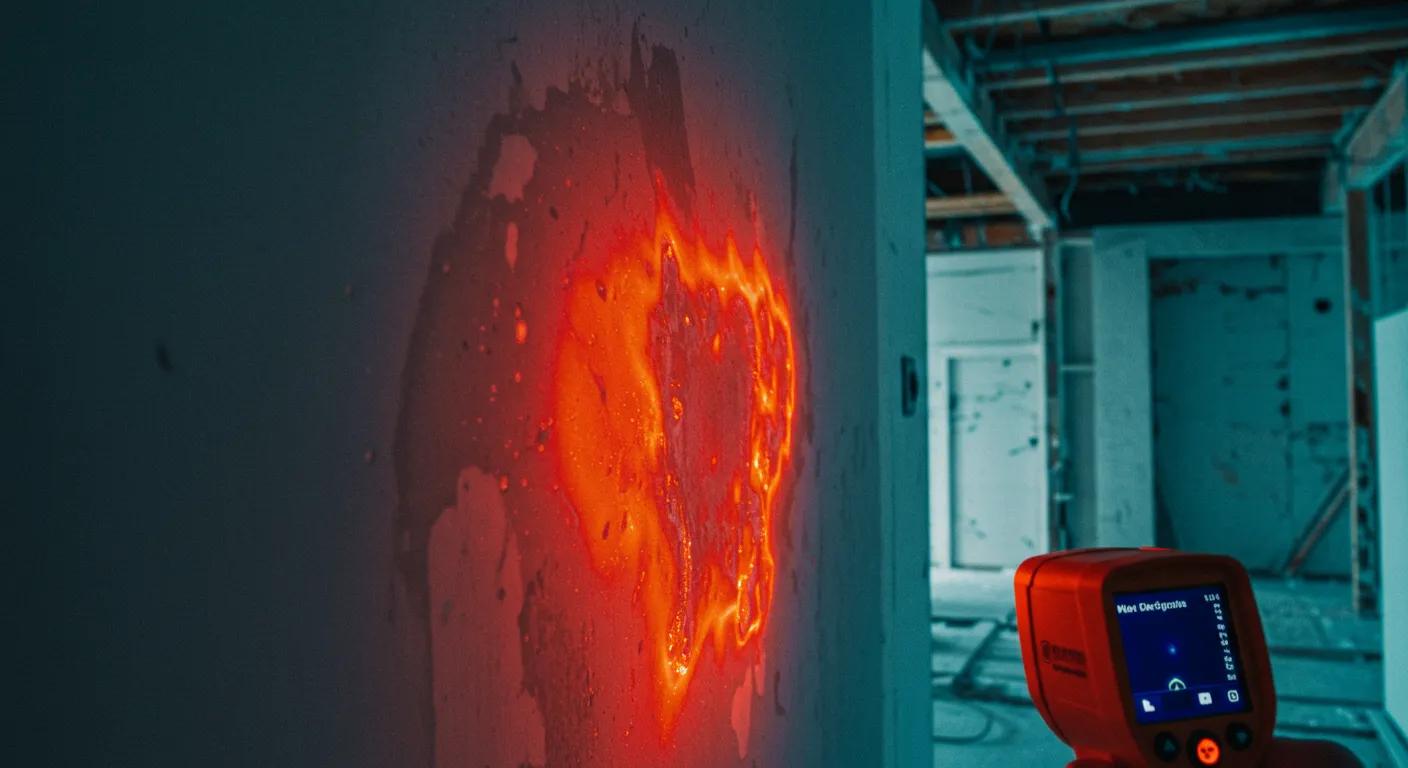
Uncover Hidden Moisture with Thermal Imaging
Authored by Fred Rodrigues, a Certified Master Inspector (CMI) and Infrared Certified Inspector with thousands of inspections completed across South Florida and Central Florida, and founder of Damngood Inspection.
BLOT – Bottom Line On Top: Thermal imaging is a non-destructive method that uncovers hidden home issues like moisture, electrical problems, and insulation deficiencies, offering crucial insights for homeowners and buyers, especially in Florida’s climate.
- Understanding Thermal Imaging – A non-destructive method that captures infrared radiation to reveal hidden issues in homes, such as moisture and electrical problems.
- Common Problems Detected – Thermal imaging identifies moisture intrusion, electrical hotspots, insulation deficiencies, HVAC leaks, and structural voids, helping homeowners address issues before they escalate.
- Importance for Florida Homes – Given Florida’s humid climate, thermal imaging is crucial for early detection of moisture-related problems, mold growth, and energy inefficiencies.
- Inspection Process Overview – The thermal imaging inspection involves a pre-inspection walkthrough, systematic scanning, and corroborative testing to ensure accurate diagnosis.
- Cost Factors – Pricing for thermal imaging inspections varies based on home size, complexity, and the depth of reporting, making it essential for homeowners to understand their options.
- Limitations of Thermal Imaging – While effective, thermal imaging cannot detect all issues, such as small leaks or specific contaminants, and should be used alongside other diagnostic methods.
- Value Addition Compared to Traditional Inspections – Thermal imaging enhances traditional inspections by revealing hidden conditions, allowing for targeted repairs and reducing the risk of post-purchase surprises.
- Recommended Frequency of Inspections – Annual thermal imaging checks are advisable in high-risk areas, especially after significant weather events or when symptoms arise.
What Is Thermal Imaging and How Does It Detect Hidden Home Problems?
Thermal imaging is a non-destructive diagnostic method that captures infrared radiation, converting it into a colorized temperature map (thermogram). It makes temperature differentials visible, relying on emissivity and delta-T to highlight anomalies. This allows quick screening of a building, prioritizing targeted invasive testing only where patterns suggest issues, guiding homeowners on when to pursue further verification.
Infrared Thermography for Comprehensive Building Diagnostics
Infrared thermography (IRT) is a powerful non-destructive technique for building diagnostics. It allows for the detection of thermal anomalies that can indicate various problems such as insulation defects, air leaks, and moisture issues. IRT is particularly useful for identifying hidden problems that are not visible to the naked eye.
Infrared thermography for building diagnostics, CA Balaras, 2002
What Types of Hidden Problems Can Thermal Imaging Reveal?
Thermography reveals concealed conditions by highlighting thermal contrasts. Common categories include moisture intrusion (cold spots), electrical hotspots (localized heat), insulation defects (patchy thermal losses), HVAC anomalies, and structural voids. As a screening tool, thermography guides targeted follow-up (e.g., moisture meters, electrical diagnostics) to confirm root causes and plan repairs.
Why Is Thermal Imaging Especially Valuable for Florida Homes?
Florida’s climate—high humidity, frequent storms, and summer heat—drives moisture intrusion, mold growth, and material degradation, making thermal imaging an effective preventive tool. High cooling loads emphasize insulation and duct efficiency, so thermal scans quickly identify energy-wasting defects. Thermography helps find early signs of leaks from storms and aging roofs, reducing costly surprise repairs for Florida homeowners and buyers.
How Does Thermal Imaging Detect Hidden Moisture and Water Leaks?
Thermal imaging detects hidden moisture by identifying temperature anomalies from evaporation, saturation, and altered thermal conductivity. Wet areas appear as colder or warmer patches. Interpreting thermograms requires correlating patterns with plumbing, roof penetrations, and weather to distinguish true moisture. When moisture is suggested, inspectors follow up with moisture meters and targeted invasive checks, prioritizing early detection to prevent mold and structural damage.
Detecting Moisture Intrusion in Buildings with Infrared Thermography
The infrared camera can be readily utilized to detect the extent of moisture intrusion in building envelopes, and to identify the location and severity of the problem. This is because the presence of moisture affects the thermal properties of the building materials, leading to temperature differences on the surface that can be detected by the infrared camera.
Detection of moisture and water intrusion within building envelopes by means of infrared thermographic inspections, 2008
What Are the Signs of Moisture Intrusion Visible in Thermal Scans?
Moisture intrusion often shows as irregular, cooler patches, linear bands near plumbing, or asymmetric thermal gradients. Thermograms show cold spots from evaporative cooling or areas retaining heat due to saturation. Inspectors correlate these with visible stains, odors, or known leak points. False positives can occur, so corroborating anomalies with a calibrated moisture meter and visual inspection is crucial to ensure remediation targets the actual source.
- Common thermal signs of moisture intrusion include: Irregular cold patches inconsistent with construction patterns.Linear bands near plumbing chases or roof penetrations.Asymmetric temperature gradients on ceilings after a rain event.
These signs should always be followed by targeted verification to confirm moisture presence and extent.
How Can Thermal Imaging Help Prevent Mold and Structural Damage?
By detecting moisture patterns early, thermal imaging enables homeowners to address leaks while repairs are simpler and less costly. Early documentation supports insurance claims and helps contractors focus remediation, limiting demolition. For humid Florida homes, timely detection reduces prolonged damp conditions favoring mold and wood degradation, lowering long-term costs and improving indoor air quality. Confirmatory testing reduces overall building maintenance costs.
Can Thermal Imaging Identify Roof and Plumbing Leaks Early?
Roof leaks become visible in thermal scans with sufficient thermal contrast (solar loading or post-rain evaporative cooling). Plumbing leaks behind walls or under floors show as consistent cold/damp signatures along pipe runs. Thermal imaging guides focused probe sampling, borescope checks, and targeted repairs, significantly narrowing where follow-up invasive testing should occur.
Detect Hidden Electrical Issues and Fire Hazards with Thermal Imaging
Thermal imaging identifies electrical problems by highlighting localized heating (hotspots) where components run hotter than peers under load, indicating loose connections, overloaded circuits, or failing components. It’s a preventive safety tool: detecting hotspots allows homeowners to schedule immediate electrical evaluation before overheating leads to damage or ignition. Interpretation requires inspecting under load and comparing identical components. Coupled with licensed electrician follow-up, thermal findings become actionable repairs, reducing fire risk and costly equipment failure.
What Are Electrical Hotspots and How Are They Detected?
Electrical hotspots are localized areas in panels, breakers, or wiring exhibiting higher surface temperatures, signaling increased resistance or excessive current. Thermographers detect them by scanning under normal load and comparing like-for-like components; small but persistent delta-T values can indicate a developing fault. When hotspots appear, immediate isolation and evaluation by a licensed electrician is recommended to measure currents, tighten connections, or replace components. Prioritizing electrical follow-up transforms thermal screening into a risk-reduction strategy.
- Typical indicators of electrical hotspots: Single breaker surface several degrees warmer than neighbors.Warm connections at splices or terminals.Linear heat patterns along wiring runs suggesting overload.
Summary: Thermography flags anomalies; licensed electrical diagnostics confirm and remediate them.
Why Is Infrared Inspection Critical for Preventing Fire Risks?
Infrared inspection is critical because it identifies overheating electrical and mechanical connections long before visible signs, enabling repairs that prevent ignition sources. Industry guidance recommends periodic thermographic surveys for preventive maintenance, reducing safety risk and unexpected costs. Thermography complements visual inspections by exposing hidden stress points under load. Documented thermograms create a repair priority list for hazardous items.
External vs. Internal Thermography for Building Defect Detection
Building defect detection using thermography can be performed either externally or internally. External thermography is useful for identifying issues like water ingress and thermal bridging, while internal thermography can reveal problems within the building’s systems, such as electrical faults or HVAC leaks.
Building defect detection: External versus internal thermography, M Fox, 2016
How Does Thermal Imaging Assess Home Insulation and Energy Efficiency?
Thermal imaging evaluates insulation and energy efficiency by displaying where conditioned air escapes through gaps, where insulation is missing/compressed, and where thermal bridging occurs. Thermograms show patchy heat loss on exterior walls, edge losses, and colder bands where insulation is absent. By revealing high-impact retrofit areas, thermography helps homeowners target upgrades that reduce HVAC runtime and lower utility bills. Paired with blower door testing, thermal imaging becomes part of a cost-effective energy audit.
What Insulation Deficiencies Can Thermal Scans Detect?
Thermal scans detect missing/thin insulation, compression/settling of attic insulation, thermal bridging at studs, and gaps around penetrations. In attics, scans reveal insufficient coverage leading to cooling losses; wall scans identify localized deficiencies. Inspectors prioritize repairs based on defect extent and location to maximize energy savings. Targeted retrofits based on thermography typically yield better returns.
- Insulation issues commonly revealed: Missing insulation manifesting as warm bands.Thermal bridging along studs and framing members.Perimeter losses around windows, doors, and penetrations.
Summary: Thermography pinpoints retrofit targets that improve comfort and lower energy consumption.
How Does Thermal Imaging Help Lower Utility Bills?
By finding significant heat transfer pathways—attic leaks, duct leakage, wall insulation gaps—thermal imaging allows homeowners to prioritize cost-effective fixes that reduce HVAC load and runtime. Sealing attic bypasses and repairing duct insulation typically reduces cooling demand, translating into measurable utility savings. Thermography-focused interventions concentrate investment where payoff is highest. Documented thermograms quantify improvements and support contractor accountability.
What Other Hidden Problems Can Thermal Imaging Detect in Homes?
Beyond moisture, electrical, and insulation, thermal imaging screens for HVAC imbalances, duct leaks, and structural anomalies like voids or delamination. These applications provide early warning of inefficiencies or voids that can harbor moisture. Thermography is part of a multi-tool diagnostic toolkit, guiding where to use duct blaster tests or borescopes for confirmation. Integrating thermal screening into routine maintenance helps prioritize repairs and manage lifecycle costs.
How Does Thermal Imaging Identify HVAC System Issues and Duct Leaks?
Duct leaks and HVAC imbalances appear as unexpected temperature differentials along duct runs, cold spots at disconnected supply branches, or localized anomalies near coils/fans indicating blockages or refrigerant issues. Inspectors compare supply/return temperatures and scan accessible duct surfaces for insulation failures or gaps. Thermography combined with airflow testing confirms severity and location. Addressing duct problems improves comfort and reduces wasted cooling energy.
How Are Structural Anomalies Revealed Through Thermal Scans?
Structural voids, delamination, and voids behind cladding manifest as irregular thermal patterns where heat transfer differs from intact assemblies. Thermography helps locate where to perform invasive verification (core sampling, probe testing, borescope) so repairs focus on confirmed problem areas. Using thermography to guide targeted structural investigation reduces cost and speeds diagnosis.
What Is the Thermal Imaging Inspection Process with Damngood Inspection?
A professional thermal imaging inspection blends preparation, methodical scanning, corroborative testing, and clear reporting for actionable findings. The process begins with a pre-inspection walkthrough to note weather, HVAC status, and concerns, followed by systematic exterior and interior scans under suitable thermal contrast. Technicians use calibrated infrared cameras, annotate thermograms, and pair images with visual photos and moisture meter readings. Finally, a prioritized report with annotated thermograms, recommended next steps, and trade references is delivered.
What Are the Step-by-Step Procedures in a Thermal Imaging Home Inspection?
Upon arrival, the inspector verifies accessibility/safety, documents visual conditions, and briefly runs HVAC/electrical systems for representative load. Exterior scans map roof, wall, and window conditions, then interior scans focus on attics, electrical panels, plumbing chases, and HVAC components. Confirmatory tools (moisture meters, borescopes) are deployed selectively where thermograms indicate anomalies to validate findings before recommending invasive repairs. A focused thermal survey balances thoroughness and cost-effectiveness.
How Are Thermal Images Analyzed and Reported to Homeowners?
Thermal images are annotated with temperature scales, captions, and comparison photos for clarity. Reports include prioritized recommendations (safety items, monitor items), suggested follow-up tests, and referrals to qualified trades. Inspectors deliver digital reports with embedded thermograms and narratives, allowing homeowners to present documentation to contractors or insurers. Clear reporting reduces confusion, accelerates repair planning, and supports transparent communication.
How Much Does a Thermal Imaging Home Inspection Cost in Florida?
Thermal imaging pricing in Florida depends on home size, scope of systems, travel, scheduling, and reporting/follow-up testing. Standard ranges vary, allowing clients to choose an add-on scan or full thermal audit. Targeted panel/attic scans are lower-cost add-ons, while full-house thermography with moisture corroboration and detailed reporting costs more. Thermal imaging is an investment preventing expensive surprises; early detection reduces remediation costs and supports safer, energy-efficient homes.
What Factors Influence Thermal Inspection Pricing in Florida?
Price drivers include square footage, number of systems, access complexity, and required confirmatory testing/extended reporting. Seasonal demand and travel distance also affect pricing. Report detail influences value. Clients should request tailored quotes to compare cost versus expected value.
- Factors affecting cost: Home size and layout complexity.Number of systems/areas included in the scan.Depth of reporting and confirmatory testing selected.
Summary: Transparent scope choices help balance price with diagnostic value.
What Are Typical Price Ranges and Service Packages Offered?
How Does Thermal Imaging Add Value Compared to Traditional Inspections?
Thermal imaging adds value by revealing conditions invisible to visual inspection—early moisture, overloaded electrical components, insulation failures—allowing targeted and prioritized repairs. It directs follow-up tests only where anomalies are detected, saving time/money and providing stronger documentation. For buyers, it reduces post-purchase surprises; for homeowners, periodic surveys support preventive maintenance, extending system life.
What Are the Limitations of Thermal Imaging in Detecting Hidden Problems?
Thermal imaging requires thermal contrast to be effective, so small slow leaks or issues masked by HVAC operation/weather changes can escape detection. Camera resolution, emissivity, and environmental factors impose limits; thermography doesn’t identify specific contaminants or directly measure voltage. Thermal scans are high-value screening tools that point to where confirmatory invasive or instrumented testing is necessary to establish exact causes and prescribe repairs.
What Can Thermal Imaging Not Detect or Where Is It Less Effective?
Thermal imaging can miss small, slow leaks without sufficient delta-T, problems behind thick insulation, or electrical faults under atypical load. It cannot identify biological contaminants or provide definitive leak source pinpointing without corroboration. Weather/solar loading can mask/mimic defects, so inspectors schedule scans under optimal conditions and couple them with other tests to reduce false negatives/positives. Recognizing these blind spots ensures judicious use.
How Should Homeowners Manage Expectations for Thermal Inspections?
Homeowners should treat thermal imaging as a screening step informing targeted follow-up—expect a prioritized list of findings, recommended confirmatory tests, and actionable next steps. Best practices include scheduling scans under suitable thermal contrast, preparing for moisture meter verification, and planning for contractor engagement on safety-critical items. Clear expectations reduce disappointment and convert insights into effective repairs.
How Does Combining Thermal Imaging with Other Inspection Methods Improve Results?
Combining thermography with moisture meters, borescopes, blower door/duct leakage testing, and electrical diagnostics converts thermal flags into verified problems with measured severity/location. Thermal imaging guides instrument deployment, reducing testing scope/invasiveness and increasing diagnostic confidence. A combined-method workflow produces stronger documentation for claims, repairs, and retrofits, delivering better outcomes than any single method alone.
Frequently Asked Questions
What is the difference between thermal imaging and traditional home inspections?
Thermal imaging uses infrared technology to detect temperature variations that indicate hidden issues, such as moisture or electrical problems, which may not be visible during a traditional inspection. Traditional inspections rely on visual assessments and may miss underlying issues. By combining both methods, homeowners can gain a comprehensive understanding of their property’s condition, allowing for targeted repairs and maintenance that can prevent costly surprises down the line.
How can homeowners prepare for a thermal imaging inspection?
Homeowners can prepare for a thermal imaging inspection by ensuring that all areas of the home are accessible, including attics, basements, and crawl spaces. It’s also helpful to run HVAC systems prior to the inspection to create representative load conditions. Additionally, documenting any known issues or recent weather events can assist the inspector in focusing on potential problem areas. Clear communication with the inspector about concerns can enhance the effectiveness of the inspection.
Are there any safety concerns associated with thermal imaging inspections?
Thermal imaging inspections are generally safe as they do not involve any invasive procedures or harmful radiation. The technology simply detects infrared radiation emitted by objects. However, inspectors should follow safety protocols, especially when accessing roofs or attics. Homeowners should also be aware that while thermal imaging can identify potential issues, it does not replace the need for professional repairs or further testing by licensed contractors when problems are detected.
How does thermal imaging contribute to energy efficiency in homes?
Thermal imaging identifies areas where conditioned air escapes, such as gaps in insulation or duct leaks, which can lead to increased energy consumption. By pinpointing these inefficiencies, homeowners can make targeted improvements, such as sealing leaks or adding insulation, which can significantly reduce heating and cooling costs. This proactive approach not only enhances comfort but also contributes to a more sustainable and energy-efficient home environment.
What should homeowners do if thermal imaging reveals issues?
If thermal imaging reveals potential issues, homeowners should follow up with confirmatory testing, such as moisture meter readings or electrical diagnostics, to accurately assess the severity of the problem. Based on the findings, it’s advisable to consult with licensed professionals for repairs or remediation. Addressing issues promptly can prevent further damage and ensure the safety and efficiency of the home, ultimately protecting the homeowner’s investment.
Can Thermal Imaging Detect Mold and Hidden Water Damage?
Thermal imaging detects temperature patterns consistent with moisture that can lead to mold and water damage but cannot directly identify mold or specific biological contaminants. Confirmatory moisture meter testing and, when needed, laboratory sampling are required to diagnose mold presence and species. Use thermography to screen for suspect areas and then follow up with targeted testing and remediation planning.
Is Thermal Imaging Worth the Cost for Homebuyers and Homeowners?
Yes—thermal imaging is often worthwhile when risk factors exist (humid climates like Florida, older roofs, recent storms, or unexplained stains/odors) because early detection can prevent expensive remediation. Examples include finding a small plumbing leak behind drywall before mold colonization or locating an overloaded breaker that could become a fire hazard. Consider targeted scans for high-risk situations and full audits when purchasing or preparing a home for sale.
Can Thermal Cameras See Through Walls?
No; thermal cameras read surface temperatures and infer subsurface anomalies based on temperature differences—meaning they do not “see through” materials but detect patterns that suggest hidden issues. Accuracy depends on material emissivity and thermal contrast, so thermography is inherently an inferential tool that requires corroborative testing to confirm underlying causes.
How Often Should Thermal Imaging Inspections Be Conducted?
For high-risk, humid climates like much of Florida, annual thermal checks for preventive maintenance make sense, with additional scans after major storms, renovations, or when occupants notice symptoms such as stains, odors, or electrical anomalies. For typical owner-occupied homes, scheduling thermography during major events—pre-purchase, pre-listing, post-repair—balances cost with value and ensures timely detection of developing problems.
Conclusion
Thermal imaging is an invaluable tool for homeowners, revealing hidden issues like moisture intrusion, electrical hotspots, and insulation deficiencies that traditional inspections may overlook. By utilizing this advanced technology, you can proactively address potential problems, ultimately saving on costly repairs and enhancing your home’s energy efficiency. Don’t wait for issues to escalate; consider scheduling a thermal imaging inspection to safeguard your investment. Explore our services today to ensure your home remains safe and efficient.