The Ultimate Checklist for New Construction Home Inspections: What to Look For to Ensure Quality and Safety
Essential New Construction Home Inspection Checklist
Authored by Fred Rodrigues, a Certified Master Inspector, this guide highlights the critical importance of new construction home inspections. It details a phase-based approach—pre-pour, pre-drywall, and final inspections—to identify defects early, ensuring quality and safety. Professional inspections go beyond municipal code checks, covering common issues, costs, and inspector selection to protect homeowners’ investments.
Why Is a New Construction Home Inspection Necessary?
New construction home inspections are crucial for evaluating installation quality and system function beyond municipal code, reducing safety risks and preserving value. Documented reports serve as evidence for builder punch lists and warranty claims.
- Identify hidden safety or structural issues before they are covered up.
- Create documented punch lists that support warranty and repair negotiations.
- Verify that systems (electrical, plumbing, HVAC) meet performance expectations.
- Reduce long-term repair costs through early detection and remediation.
What Are the Differences Between Municipal Inspections and Professional Home Inspections?

Municipal inspections focus on minimum code compliance. Professional home inspections comprehensively evaluate workmanship and system performance, identifying quality issues municipal checks often miss. This independent evaluation is crucial.
How Can Inspections Protect Your Investment and Safety?
Inspections protect investment by providing documented action items for the builder, reducing unexpected repair costs and preventing progressive failures. For safety, inspectors verify critical protections. The report serves as a negotiating tool and record for warranty claims.
What Are the Common Misconceptions About New Build Inspections?
Many buyers mistakenly believe new homes are defect-free or that builders automatically fix everything. Others assume municipal permits negate independent inspections. Recognizing these myths helps homeowners proactively schedule inspections and preserve warranty rights.
What Are the Key Phases of New Construction Home Inspections?
A phase-based approach divides the build into pre-pour/foundation, pre-drywall/framing, and final/walkthrough inspections. This allows defects to be corrected before concealment, maximizing remediation and strengthening warranty claims. Each phase targets specific systems.
What Should You Check During the Pre-Pour/Foundation Inspection?
A pre-pour inspection verifies foundation layout, reinforcement, and site drainage before concrete. Inspectors check footing locations, rebar spacing, soil compaction, and plumbing/conduit sleeve locations. Correcting misalignments at this stage prevents expensive remedial work.
What to Look for in the Pre-Drywall and Framing Inspection?
The pre-drywall inspection validates structural connections, load paths, and rough-in installations before concealment. Inspectors verify joist/rafter installation, nailing, shear walls, and bracing. Rough-in checks include electrical box placement, plumbing slope, and HVAC duct layout.
How to Conduct the Final Inspection and Walkthrough Checklist?
The final inspection tests every major system, verifies finish quality, safety features, and site grading before occupancy, generating a punch list. Inspectors run HVAC, operate appliances, test outlets, and inspect doors/windows. The “blue-tape” method marks, photographs, and categorizes defects.
When Is the Best Time to Schedule Each Inspection Phase?
Schedule pre-pour immediately before concrete placement. Plan pre-drywall/framing once rough-ins are complete but before insulation/drywall. The final inspection should occur prior to final payment and closing, after systems are operational.
What Are the Most Common Issues Found in New Construction Homes?
Common new construction defects cluster by system (electrical, plumbing, HVAC, structural/foundation, finishes) and vary in urgency. Inspectors categorize defects by likelihood and impact for prioritization. The table below lists typical defect types and potential impact.
Which Electrical System Defects Are Frequent in New Builds?
Frequent electrical defects include unsecured/mislabeled panels, loose connections, and missing AFCI/GFCI protection, posing safety hazards. Inspectors test circuits, confirm labeling, and verify grounding. Early documentation avoids fire risk.
What Plumbing Problems Should You Watch For in New Construction?
Common plumbing defects include misaligned rough-ins, improper drain slopes, unsecured piping, and poor fixture installations. Inspectors pressure-test water lines pre-drywall and check fixtures for drainage/leaks at final. Verifying venting reduces odor/failure risks.
How Do HVAC Issues Affect New Homes and What to Inspect?
HVAC problems often arise from leaky ducts, incorrect unit sizing/refrigerant charge, and poor system balancing, causing uneven temperatures and efficiency losses. Inspectors verify airflow, duct sealing/insulation, and thermostat operation.
What Structural and Foundation Defects Are Common?
Common structural/foundation issues include insufficient reinforcement, improper footing depth/compaction, early settlement, and cracking. Inspectors look for out-of-plumb walls, uneven floors, and connection defects. Differentiating cosmetic from structural cracks is crucial.
What Exterior and Interior Finish Defects Are Often Overlooked?
Overlooked finish defects include incomplete flashing, insufficient siding terminations, improperly sealed window openings, and door/window misalignment. Inspectors test window/door operation, check flashing/sealant, and note paint runs or trim gaps. Many defects create moisture intrusion pathways.
How Much Does a New Construction Home Inspection Cost and What Is Its Value?
New construction home inspections typically range from a few hundred dollars for a final inspection to higher amounts for multiple phases and add-ons. Value is realized through avoided repairs, improved warranty outcomes, and peace of mind. Costs depend on home size, number of phases, and inspector experience. The table below details common service components, cost ranges, and their importance.
What Factors Influence the Cost of New Home Inspections?
Inspection cost varies with home size, number of phases, diagnostic tools (thermal imaging, sewer camera), and inspector qualifications. Larger homes and add-ons increase cost. Inspector experience and report quality affect pricing.
How Does Inspection Save Money Long-Term?
Inspections save money by preventing concealed defects from becoming expensive repairs, improving leverage for builder warranty repairs, and avoiding post-occupancy emergency costs. Correcting issues before finishes can save thousands. Multi-phase inspections often justify their upfront cost.
How to Choose the Right Home Inspector for Your New Construction?
Choosing an inspector with new-construction experience, strong documentation, and phase inspection capability maximizes defect identification and remediation. Look for inspectors providing sample reports with clear photos, prioritized severity, and repair actions. New-build experience is key. The checklist below outlines selection criteria.
- Certifications and training: Verify ASHI/InterNACHI or equivalent credentials and relevant continuing education.
- Sample reports: Request example reports demonstrating clear photos, prioritized findings, and repair recommendations.
- Phase experience: Confirm the inspector performs pre-pour, pre-drywall, and final inspections and understands construction sequencing.
What Qualifications and Certifications Should Inspectors Have?
Inspectors should hold recognized certifications (e.g., ASHI or InterNACHI), evidence of continuing education, and specific new-construction training. Prefer inspectors with recent new-build experience and sample reports, as these reduce missed defects and ensure actionable findings.
How to Evaluate Inspection Reports and Services Offered?
A high-quality report includes clear, dated photographs, concise defect descriptions, severity/prioritization, and recommended repair actions. Look for reports separating safety from cosmetic issues and providing measurable tests. Strong reports enhance negotiation leverage.
Why Is Experience with New Construction Inspections Important?
New-construction inspections require familiarity with sequencing, common trade errors, and builder workflows. Experienced inspectors anticipate common defects and know which items are easiest to correct at each phase. They provide actionable punch lists for builder review.
What Should Be Included in a New Construction Final Walkthrough and Punch List?
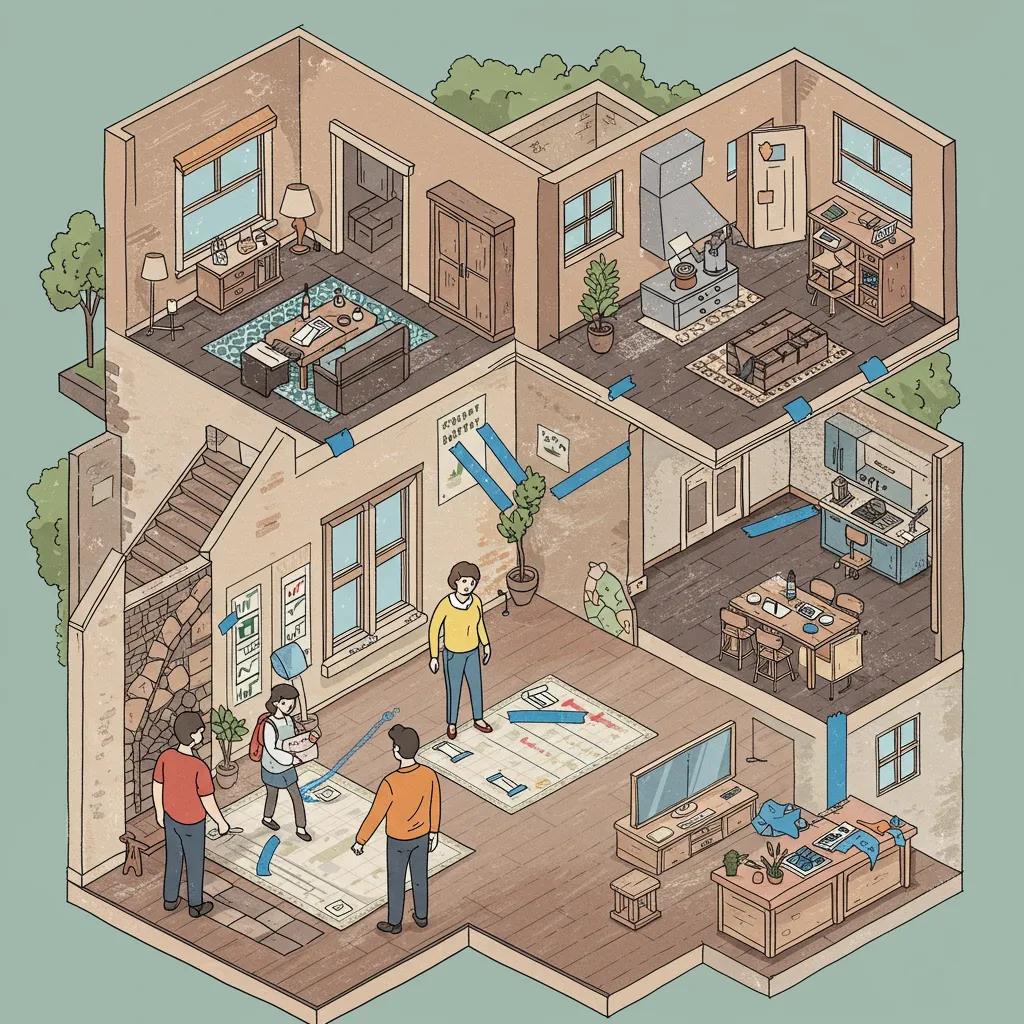
A structured final walkthrough combines functional system testing, finish inspection, and prioritized documentation to produce an actionable punch list before closing. This process includes blue-tape marking, photographic records, and categorized severity for clear, trackable builder responses. Follow this stepwise method to create an effective punch list:
- Prepare: Bring inspection report, camera, notepad, and a checklist that covers systems and finishes.
- Mark and document: Use blue tape to mark items, photograph each item with a brief caption and timestamp.
- Categorize urgency: Label items as safety/critical, major (functional), or cosmetic to prioritize responses.
- Deliver and track: Share the documented punch list with the builder and request timelines; retain copies for warranty claims.
How to Create an Effective Punch List During Final Walkthrough?
An effective punch list is concise, evidence-based, and prioritized. Group items by trade, include photos, exact locations, and completion timelines for critical items. Use clear descriptions, retain all communications, and schedule a re-inspection to verify repairs. Good punch-list practices flow directly into determining which items must be resolved before closing.
What Are the Critical Items to Verify Before Closing?
Critical pre-closing checks include functional safety devices (GFCI/AFCI, smoke/CO alarms), proper HVAC/hot water operation, secure handrails, correct grading/drainage, and absence of active leaks. Prioritize items creating immediate risk or large repair costs, resolving them before closing.
How Does the Punch List Affect Builder Warranty and Repairs?
A clear, dated punch list triggers builder warranty responsibilities. Photographic evidence, inspection excerpts, and time-stamped communications create a record supporting warranty claims and avoiding disputes. Keep organized records of all repair requests and follow up on incomplete work.
What Are Builder Warranties and How Do They Relate to Home Inspections?
Builder warranties cover workmanship (short-term) and structural elements (longer-term). Inspections document defects, providing evidence for timely claims. Understanding warranty scope helps buyers prioritize inspections aligning with deadlines and proof. Inspection reports with date-stamped photos and clear defect descriptions are effective supporting documents. Below is a concise table summarizing warranty types, durations, and inspection support.
What Types of Warranties Do Builders Typically Provide?
Builders offer separate warranties for workmanship, mechanical systems, and structural elements, with varying durations and coverage limits. Buyers should read warranty documents and coordinate early inspections for evidence within claim windows.
How Can Inspections Support Warranty Claims?
Inspections support warranty claims by providing dated, objective reports with photos, severity ratings, and recommended repairs. Include inspection excerpts, clear photos, and a discovery timeline when filing to accelerate builder response. Timely written notification strengthens the buyer’s position.
What Legal Recourse Is Available for New Construction Defects?
If builder remediation is incomplete and warranty remedies exhausted, buyers have escalation options: mediation, arbitration, or legal action (consult counsel). Document all repair attempts, retain inspection reports, and follow contractual dispute resolution before legal steps.
Frequently Asked Questions
What should I do if defects are found during the inspection?
Document defects with photos and specifics. Present to the builder for a punch list, ensuring agreed timelines. Keep records for warranty claims.
How can I prepare for a new construction home inspection?
Review plans, create a checklist, ensure site accessibility, and consider being present.
What are the potential consequences of skipping a new construction inspection?
Skipping an inspection can lead to hidden defects, costly future repairs, lost negotiation leverage, and diminished long-term investment value.
How often should I schedule inspections during the construction process?
Schedule inspections at key milestones: pre-pour, pre-drywall, and final, for timely defect identification.
What should I expect in the inspection report?
Expect a comprehensive report with clear photos, defect descriptions, repair recommendations, and severity categorization. It’s a valuable tool for negotiations and warranty claims.
Can I use inspection findings to negotiate with the builder?
Yes, inspection findings are powerful negotiation tools. Documented defects provide a basis for requesting repairs before closing, strengthening future warranty claims.
What are the most common issues found in new construction inspections?
Common issues include electrical (loose connections), plumbing (misaligned rough-ins), HVAC (leaky ducts), structural (inadequate reinforcement/cracking), and finish defects (incomplete flashing).
Conclusion
Thorough inspections during new home construction are essential for safeguarding your investment and ensuring safety. Early defect identification allows negotiation for repairs and preserves property value. Schedule inspections at critical milestones for maximum protection. Find the right inspector and secure your home today.