Your buyer hears "4 Point Inspection" and the questions start fast.
Does this replace the Pre-Purchase Inspection? Is the house being judged? Does this mean something is wrong? Who is supposed to explain it?
This is where agents get put in a tough spot. You want the buyer to understand the process without turning yourself into the insurance professional, the inspector, the lender, or the contractor.
Here is the plain-English version.
Updated Summer 2026 note: Damngood covered this topic in an earlier article. This version is written for Florida agents and buyers who need a clearer explanation they can share before inspection week.
A 4 Point Inspection documents four systems: roof, electrical, plumbing, and HVAC. Insurance professionals often ask for it when they need information about those systems. A Pre-Purchase Inspection is different. It is the buyer's broader look at the visible and accessible condition of the property before they move forward.
Those two inspections do not do the same job.

Quick answer
A 4 Point Inspection in Florida documents four systems: roof, electrical, plumbing, and HVAC. It is usually tied to the insurance side of the transaction. It does not replace the Pre-Purchase Inspection, which is the buyer’s broader look at the visible and accessible condition of the property.
- Use the 4 Point Inspection for the insurance lane.
- Use the Pre-Purchase Inspection for the buyer’s protection.
- Keep insurance decisions with the insurance professional.
- Give buyers a simple script before inspection week so they do not confuse the two.
Quick recap for agents
- A 4 Point Inspection focuses on four systems: roof, electrical, plumbing, and HVAC.
- It is usually tied to the insurance side of the transaction.
- It does not replace the Pre-Purchase Inspection.
- The Pre-Purchase Inspection is the buyer's protection.
- The safest agent script explains scope. It does not predict insurance decisions.
Buyer handout agents can share
If your buyer is confused, send the short explanation below before inspection week.
A 4 Point Inspection usually helps with the insurance side of the transaction. It looks at four systems: roof, electrical, plumbing, and HVAC. A Pre-Purchase Inspection is different. That inspection gives you a broader look at the visible and accessible condition of the home before closing.
Agents can also point buyers to Damngood’s 4 Point Inspection, Pre-Purchase Inspection, and Wind Mitigation Inspection pages when they need the service lanes separated.
Why buyers get confused
Most buyers do not hear these terms every day. They hear the word "inspection" and assume every inspection has the same purpose.
In Florida, that assumption can create real confusion. A buyer might hear about a 4 Point Inspection, a Wind Mitigation Inspection, and a Pre-Purchase Inspection during the same week. If nobody explains the lanes early, the buyer may think one report covers everything.
It does not.
A 4 Point Inspection is narrow by design. It documents specific information about the roof, electrical, plumbing, and HVAC systems. It does not cover the full property. It does not give the buyer the same picture a Pre-Purchase Inspection gives them.
That distinction matters most when the buyer is deciding what protection they are keeping for themselves.

What a 4 Point Inspection covers
The four points are easy to remember.
Roof: visible roof covering, approximate age when available, visible condition, and documented concerns.
Electrical: panel information, visible wiring type where accessible, and visible condition concerns.
Plumbing: visible supply piping information, water heater notes, and visible condition concerns.
HVAC: cooling and heating equipment information, approximate age when available, and visible operating condition notes.
That is the lane. Four systems. Focused documentation.
It does not mean every part of the home has been inspected. Windows, doors, attic conditions, structure, drainage, appliances, pool equipment, interior finishes, and many other parts of the property belong in the broader Pre-Purchase Inspection scope.
What a Pre-Purchase Inspection does differently
The Pre-Purchase Inspection is for the buyer.
It helps the buyer understand the visible and accessible condition of the property before they decide how to move forward. It gives the buyer a broader report, more context, and a better view of what may need the right specialist.
That last part matters. An inspector can identify visible concerns and explain what was observed. Severity, mitigation, repair options, or remediation should come from the appropriate specialist.
A simple way to explain it to buyers:
"The 4 Point Inspection documents four systems for the insurance side. Your Pre-Purchase Inspection is separate. That is the broader inspection for you as the buyer, so you understand what is visible and accessible before you move forward."
That keeps the insurance lane clean and keeps the buyer from thinking the 4 Point Inspection is their full protection.
What agents should not promise
This is where the conversation can get risky.
Avoid predicting the policy decision, pricing result, or carrier response. The inspector documents visible conditions. The insurance professional and underwriter decide how that information applies to the policy.
A safer answer sounds like this:
"The inspector documents what is visible. Your insurance professional can explain how the carrier will use that information."
Short. Accurate. Much easier to defend.
How Wind Mitigation Inspection fits in
Wind Mitigation Inspection is another separate lane. It documents wind-resistant features, such as roof shape, roof deck attachment, roof-to-wall connection, opening protection, and related items on the wind mitigation form.
In Florida, a Wind Mitigation Inspection is valid for 5 years.
That does not make it a replacement for the Pre-Purchase Inspection. It answers a different question.
The Wind Mitigation Inspection documents wind mitigation features. The 4 Point Inspection documents four systems. The Pre-Purchase Inspection gives the buyer the broader property picture.
If a buyer is unsure which report answers which question, the safest move is to point them to the right professional instead of trying to answer every lane yourself.
A buyer handoff agents can save
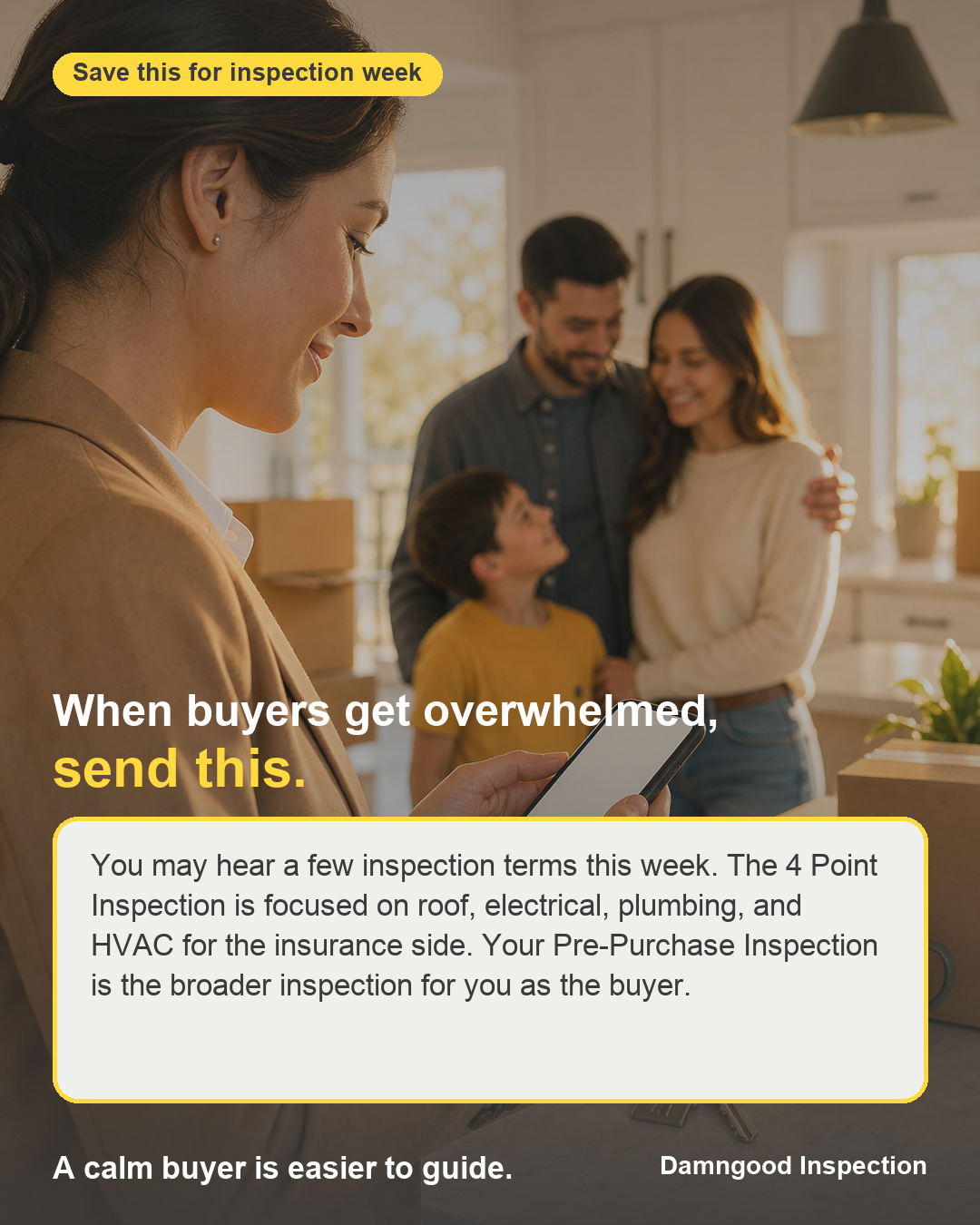
When a buyer gets overwhelmed, send this:
"You may hear a few inspection terms this week. The 4 Point Inspection is focused on roof, electrical, plumbing, and HVAC for the insurance side. The Wind Mitigation Inspection documents wind-resistant features. Your Pre-Purchase Inspection is the broader inspection for you as the buyer. If you are not sure who should answer a question, I will help point you to the right professional."
When buyers get overwhelmed, send this.
Tap inside the box, copy it, and send it before inspection week.
This keeps the agent helpful without stepping into the insurance professional’s lane.
That message does not overexplain. It lowers the temperature and keeps everyone in the right lane.
Why this protects the deal
Confusion makes buyers nervous. Nervous buyers slow down, overread small details, or treat every new form like a sign something is wrong.
Clear scope calms the conversation.
When buyers understand what each inspection does, they can read each report with the right expectation. The 4 Point Inspection stays in the insurance lane. The Wind Mitigation Inspection stays in the wind mitigation lane. The Pre-Purchase Inspection remains the buyer's own protection.
That helps agents protect the deal without overstepping.
Local Florida note
This comes up across Central Florida and South Florida because insurance questions are part of the buying process here. Older homes in Boca Raton, Coral Springs, Fort Lauderdale, Pembroke Pines, West Palm Beach, Orlando, Clermont, Lake County, and nearby markets can bring these terms into the conversation earlier than buyers expect.
The explanation does not need to be complicated.
Four systems. Insurance lane. Not a substitute for the Pre-Purchase Inspection.
Say that early and the buyer usually has a calmer inspection week.
FAQ
Is a 4 Point Inspection the same as a Pre-Purchase Inspection?
No. A 4 Point Inspection documents four systems: roof, electrical, plumbing, and HVAC. A Pre-Purchase Inspection is broader and helps the buyer understand the visible and accessible condition of the property before moving forward.
Who uses the 4 Point Inspection?
A 4 Point Inspection is usually used on the insurance side of the transaction. Buyers should ask their insurance professional how the information applies to their policy.
Can a buyer skip the Pre-Purchase Inspection if they already have a 4 Point Inspection?
That is a risky misunderstanding. The 4 Point Inspection is narrow. It does not give the buyer the broader property picture that a Pre-Purchase Inspection is designed to provide.
What does a 4 Point Inspection include in Florida?
It includes roof, electrical, plumbing, and HVAC documentation. The inspector records visible conditions, approximate ages where available, and photos or notes needed for the form. Other parts of the property belong in the Pre-Purchase Inspection scope.
How much is a 4 Point Inspection in Florida?
Pricing depends on the inspection company, property, market, and whether it is bundled with other services. Buyers should ask the inspector for current pricing and ask their insurance professional which forms are needed for the policy.
What will fail a 4 Point Inspection in Florida?
A 4 Point Inspection is not a simple yes or no decision on the house. The inspector documents visible conditions. The insurance professional and carrier decide what those conditions mean for the policy. Agents should avoid predicting that decision.
How long is a Wind Mitigation Inspection valid in Florida?
A Wind Mitigation Inspection is valid for 5 years in Florida. It documents wind-resistant features and is separate from both the 4 Point Inspection and the Pre-Purchase Inspection.
Schedule the right inspection before closing
If your buyer is trying to understand the difference between a 4 Point Inspection and a Pre-Purchase Inspection, Damngood can help explain the inspection lane in plain English.
Schedule the Pre-Purchase Inspection before your buyer gives up their own protection in the deal.