Most deals don’t die because of what the inspector found. They die because nobody helped the buyer understand the findings. Agents who know how to sort safety hazards from routine maintenance keep deals together — and build the kind of trust that turns one transaction into ten referrals.

The report did its job. Now it’s your turn.
If you’ve closed more than a handful of deals, you’ve had this happen. Everything is tracking. Your buyer loves the house. The offer is accepted. Then the inspection report shows up and your buyer starts googling “foundation crack” at midnight.
By morning, they want to walk.
It feels like the inspector torpedoed your deal. But after thousands of inspections across Central and South Florida, I can tell you what actually went wrong in almost every case: nobody walked the buyer through the report.
Not “emailed them the PDF.” Not “told them it went fine.” Actually sat down — or got on the phone — and helped them understand what they were reading.
That’s the gap. And it’s yours to fill.
Three categories every agent should know
Every inspection report, on every house, contains findings. A report with zero findings would be suspicious, not reassuring. The question isn’t whether there are findings. It’s whether anyone helped the buyer sort them.
Everything in an inspection report falls into one of three categories:
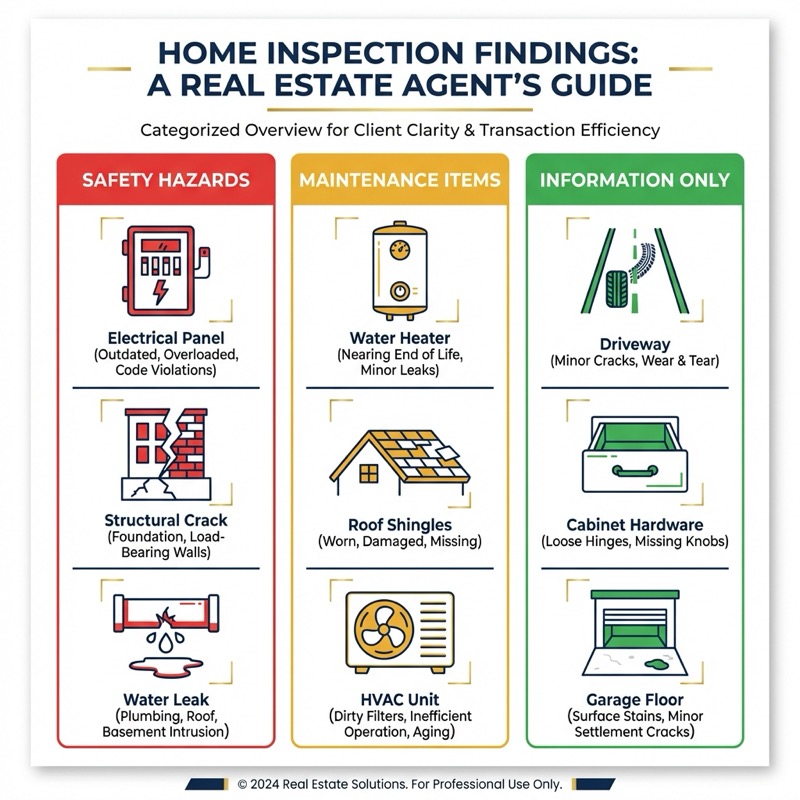
🔴 Safety hazards
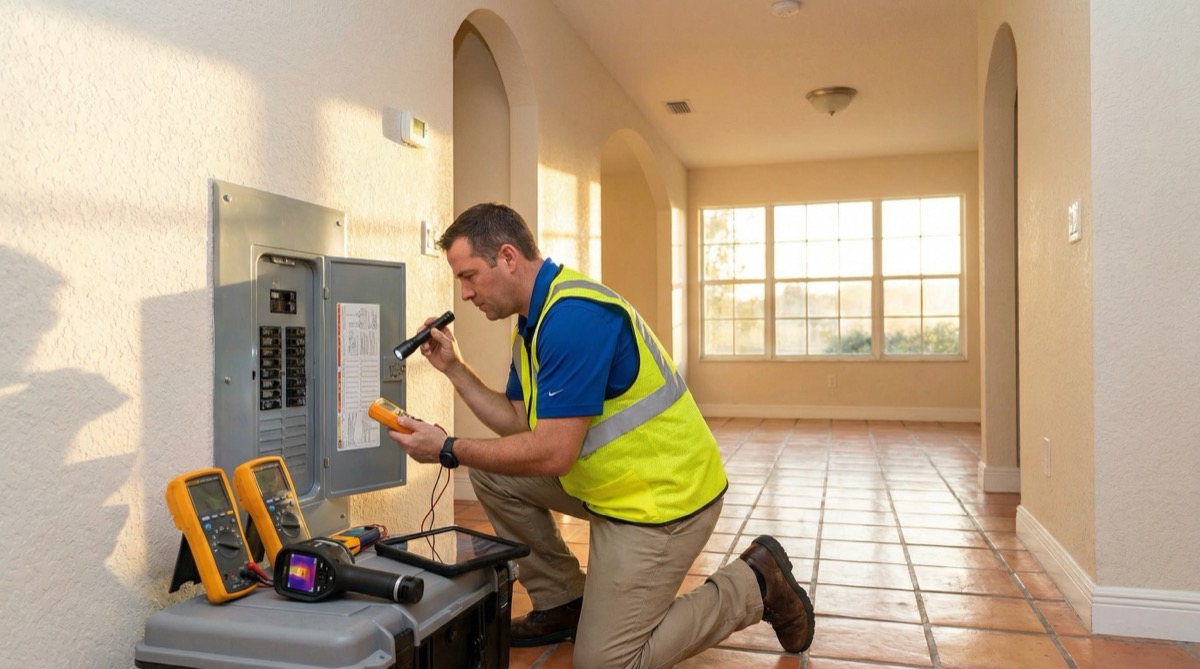
These are the real ones. A Federal Pacific electrical panel that could overheat. Structural cracks in a load-bearing wall. Active water intrusion in the attic. When you bring these to a negotiation, you’re protecting your client, and they know it. This is where you earn trust that lasts longer than the transaction.
🟡 Maintenance items
This is the bulk of most reports, and it’s where buyers panic when nobody explains it. An aging water heater. A 15-year-old shingle roof that’s going to need replacing soon — and that insurance companies will care about. HVAC that needs servicing. Every house has these. When you tell your buyer “this is normal for a house this age, and here’s how we handle it,” they stop spiraling and start planning. That’s the moment you go from “my agent” to “my agent who actually knows what she’s doing.”

🟢 Information only
Minor driveway cracks. Cosmetic wear on cabinet hardware. A scuff on the garage floor. These aren’t repairs and they aren’t problems. They’re context. When you frame them that way — “the inspector is noting this for your records, not flagging it as a concern” — your buyer trusts your judgment.
The agents who lose deals at inspection treat all three categories the same. The agents who close consistently sort them in real time during that phone call with the buyer.
The call you should make the same day
The single most effective thing you can do after an inspection is call your buyer the day the report comes in. Not the next day. Not after the weekend. The same day.
Here’s a version that works:
“I’ve gone through the report. There are a few things I want to walk you through. Some are real and we’re going to negotiate on those. Some are normal maintenance — every house has them. And some are just context. Let me break it down.”
That call changes the entire dynamic. Your buyer goes from “what’s wrong with this house” to “my agent is on top of this.” And you go from hoping the deal survives to controlling the conversation.
The agents I work with who close at the highest rate all do some version of this. They don’t wait. They don’t let the buyer sit alone with a 40-page document and a search engine.
Scripts for common findings
You don’t need to memorize the entire report. You need to know how to talk about the five or six things that come up on almost every inspection.
Roof age (15+ years on shingles)
“The roof is toward the end of its useful life. No active leaks right now, but insurance companies in Florida pay close attention to roof age. This is a real negotiation item. Let’s get a roofing estimate and ask the seller for a credit or replacement before closing. This protects you and it protects your insurance options.”
HVAC system
“The AC is running fine today, but it’s older. The inspector flagged it so you know to plan for it. This is a budgeting item, not a walk-away item. You’ll want to set aside money for a replacement in the next few years.”
Electrical panel concerns
“This one we take seriously. The inspector flagged the panel as a potential safety issue. Let’s get an electrician out for an estimate and include it in our repair request. This is exactly the kind of thing inspections catch so you don’t find out later.”
The small stuff (driveway cracks, cosmetic wear, caulking)
“These are homeowner items. Budget a few hundred dollars and a Saturday. None of these affect whether this is the right house for you.”
The pattern in every script: name the finding, give it context, tell the buyer what happens next. That’s the formula. When you do it consistently, your buyer feels informed instead of afraid.
What actually kills deals
After thousands of inspections, the pattern is clear. The things that actually end transactions are rarely in the report:
- A buyer who was already getting cold feet and used the report as a reason to bail. You can’t always prevent this, but you can reduce it by managing expectations before the inspection. Tell your buyer ahead of time: “Every house has findings. That’s what inspections are for. I’ll walk you through everything.”
- An agent on the other side who overreacted to routine findings and pressured the seller into refusing repairs. Your calm, categorized approach sets the tone for the whole negotiation.
- Nobody explaining the report, leaving the buyer alone with technical language and Google. This one is 100% preventable, and it’s the most common reason deals fall apart at inspection.
Key takeaways
- Every house has inspection findings. A clean report would be a red flag, not a relief.
- Sort findings into three categories: safety, maintenance, and information only. This framework cuts buyer anxiety in half.
- Call your buyer the same day the report comes in. Don’t let them sit with it overnight.
- Use the scripts above for the findings that come up on every inspection.
- The agents who close consistently aren’t the ones with perfect houses. They’re the ones who control the narrative after inspection.
Related services
If you’re working with buyers in Central or South Florida and want an inspector who communicates findings in a way that helps your deals:
- Pre-purchase home inspection — full property evaluation with same-day report
- 4-point inspection — roof, electrical, plumbing, HVAC for insurance
- Wind mitigation inspection — can save your buyer hundreds on insurance premiums
Download the free guide
I put together a one-page guide for agents: “How to Walk Your Client Through an Inspection Report (Without Losing the Deal).” It covers the three categories, the scripts, and a checklist for that same-day call.
Frequently asked questions
What should I do when my buyer wants to walk after inspection?
Call your buyer the same day the report comes in. Walk them through findings by category: safety hazards that need negotiation, maintenance items that are normal for any house, and information-only items that are just context. When you frame findings this way, buyers move from panic to planning.
How do I explain inspection findings to my buyer?
Sort every finding into three buckets: safety hazards (electrical, structural, active leaks), maintenance items (aging systems, roof wear, HVAC service), and information only (cosmetic wear, driveway cracks). Tell your buyer which category each finding falls into and what the next step is for each one.
What inspection findings are actual deal-breakers?
True deal-breakers are safety hazards: compromised electrical panels, structural damage to load-bearing walls, and active water intrusion. These require professional estimates and serious negotiation. Most other findings — aging systems, cosmetic wear, routine maintenance — are normal and negotiable.
Should I attend the home inspection as a real estate agent?
Attending the inspection lets you hear the inspector explain findings in real time. You can ask questions on the spot and prepare your buyer before they read the written report alone. Many experienced agents attend the last 30 minutes to catch the summary walkthrough.
How do I negotiate repairs after a home inspection?
Focus repair requests on safety hazards and major maintenance items. Get contractor estimates for big-ticket items like roofing or electrical work. For routine maintenance, ask for a closing credit instead of requiring the seller to make repairs. This keeps the deal moving and gives your buyer flexibility.
Fred Rodrigues, CMI — Certified Master Inspector
Damngood Inspection | FL License HI12343
Contact us | Book an inspection