
Unlocking Mold Air Tests Insights
This comprehensive guide was written by Fred Rodrigues, a Certified Master Inspector with thousands of indoor air quality inspections conducted across Florida, bringing unparalleled expertise to understanding and addressing indoor mold concerns.
Recap of Mold Air Testing: Methods, Interpretation & Next Steps
This article demystifies mold air tests, explaining how they measure airborne fungal particles to assess indoor spore levels. It covers common methods like spore trap analysis, culture tests, ERMI, and VOC screening, guiding you on interpreting results and understanding their implications for your indoor environment. You’ll learn when testing is useful, the differences between DIY and professional options, and crucial next steps including remediation and prevention strategies. The goal is to provide a clear framework for homeowners facing visible mold, musty odors, or unexplained health symptoms, empowering informed decisions for a healthier home.
What Are Mold Air Tests and Why Are They Important?
Mold air tests are environmental assessments that collect air or dust to determine the presence and concentration of mold spores, helping identify indoor contamination sources. They work by drawing air through a sampler or collecting settled dust, then using microscopy, culture, or DNA methods for quantification and identification. Testing is crucial for detecting hidden growth, aiding remediation planning, and providing objective data for health concerns or insurance. However, air sampling is a snapshot, varying with time and conditions, so results require context from moisture inspection and occupant information.
Mold air tests detect spores by collecting airborne particulates onto a sampling medium for laboratory analysis, quantifying and identifying genera or species. Understanding this workflow is key to choosing the right method.
How Do Mold Air Tests Detect Mold Spores in Indoor Air?
Airborne mold sampling uses devices like spore traps and impactor/culture samplers. Spore traps collect particles for microscopic counting and identification, providing quick, non-viable counts. Culture-based samplers grow viable organisms for speciation but may miss non-culturable types. Labs process samples to report spore concentration, genera, and sampling conditions. Microscopy reveals current airborne spores, while culture shows what can grow, offering complementary insights. Pairing air tests with indoor air quality metrics like humidity and ventilation strengthens conclusions.
Why Is Indoor Air Quality Assessment Critical for Mold Detection?
Indoor air quality assessment is critical because it links spore findings to environmental factors like humidity, temperature, and ventilation that influence mold growth. High humidity or poor airflow creates conditions for mold proliferation. Monitoring hygrometers and moisture sources helps determine if elevated indoor counts indicate active growth. Comparing indoor and outdoor samples accounts for baselines, providing more reliable signals. Track relative humidity and visible water intrusion during sampling to link counts to probable sources, guiding inspection or remediation. We now catalogue the main testing methods.
What Types of Mold Air Testing Methods Are Available?
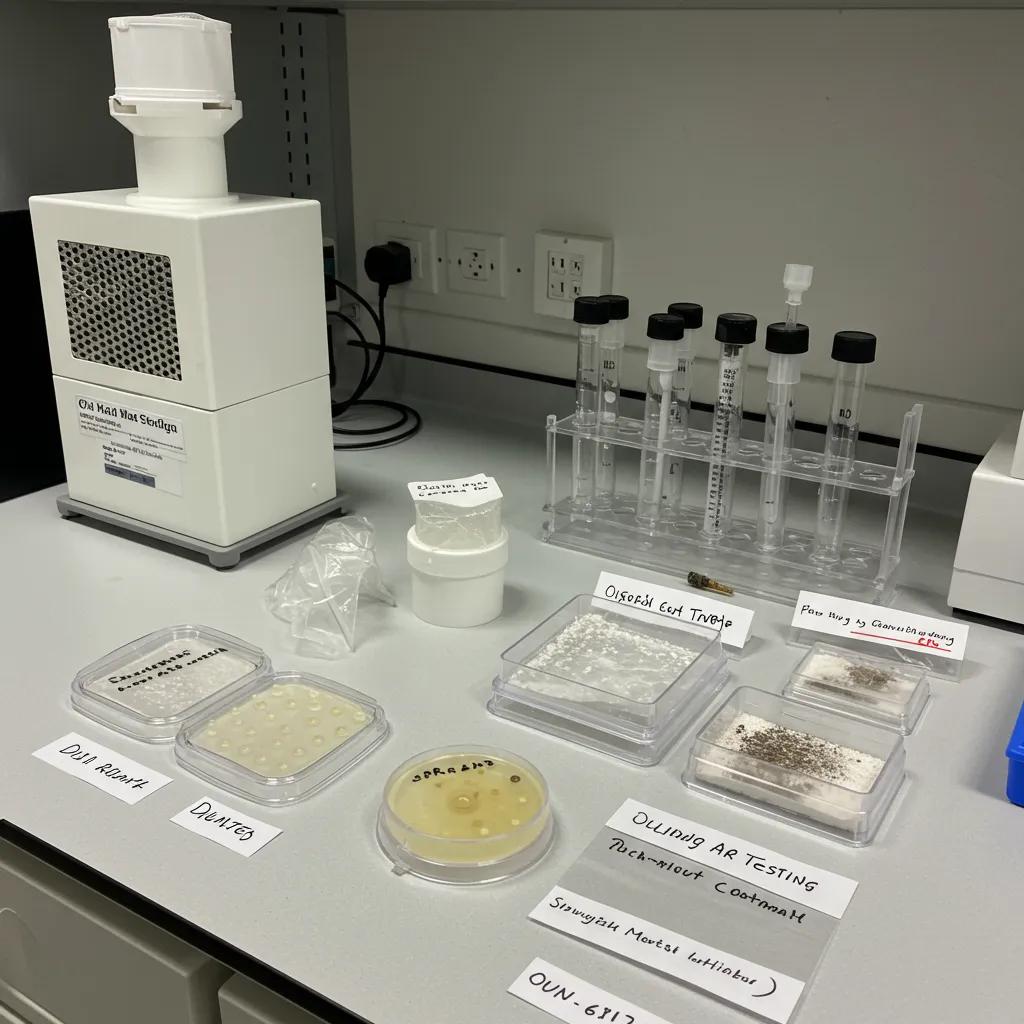
Several methods serve different diagnostic goals: spore trap analysis for rapid airborne quantification, culture for viable identification, ERMI for dust-based DNA profiling, and chemical screening for microbial VOCs. Each method varies by sample, analysis, turnaround, cost, and interpretation, making it essential to match the method to your objective. The table below compares common test methods and their uses.
No single method answers every question; combining techniques often yields the clearest diagnostic picture. The next subsections detail spore trap mechanics, culture, ERMI, and VOC testing.
How Does Spore Trap Analysis Work and What Are Its Benefits?
Spore trap analysis uses an air pump to capture particles on a sticky surface, which are then microscopically examined to count and categorize spore types, providing a quantitative snapshot of airborne concentration. Benefits include fast turnaround, standardized indoor-outdoor comparisons, and identifying high-level indoor sources when counts are elevated. However, it doesn’t determine viability or always resolve species. Spore trap data helps prioritize inspections and remediation, especially with humidity data. Interpretation requires experienced analysts due to morphotype overlap, often suggesting complementary methods. The next subsection covers culture tests, ERMI, and VOC testing.
What Are Culture Tests, ERMI, and VOC Testing?
Culture tests grow viable fungi from collected material on nutrient media, identifying active species, though some may not culture well. ERMI (Environmental Relative Moldiness Index) analyzes settled dust DNA, providing a long-term signature of indoor mold reservoirs for retrospective exposure assessment. VOC and microbial VOC testing detect volatile compounds from active microbial metabolism, indicating ongoing growth even with low spore counts, though interpretation requires care. Costs and turnaround vary; culture and spore traps are generally faster and cheaper than ERMI or specialized VOC analysis. Choice depends on prioritizing immediate airborne risk, reservoir characterization, or active growth detection, leading into interpreting lab reports.
ERMI Scale: DNA-Based Mold Analysis for Asthma Studies
ERMI analysis of a dust sample may reveal “hidden” mould, and the ERMI scale has been used in four epidemiological studies of childhood asthma in which the ERMI scale was used to characterize the mould.
Traditional mould analysis compared to a DNA-based method of mould analysis, 2011
How Do You Interpret Mold Air Test Results?
Interpreting results involves comparing indoor counts to outdoor baselines, identifying genera, and integrating moisture, occupancy, and visible mold data. This layered approach reduces false positives and guides action. Key report elements include spore concentration, genera/species lists, and lab comments. Mapping these to homeowner actions clarifies whether inspection, targeted remediation, or monitoring is warranted. The table below operationalizes interpretation for non-experts.
This mapping converts lab language into practical steps, emphasizing context. The next subsections explain spore counts and health implications of common mold groups.
Spore Counts and Dampness: Interpreting Mold Test Results
Penicillium/Aspergillus counts were consistently elevated in damp vs. reference (dry or outdoor) locations. Total spore counts provided a weaker, less consistent signal. The most detailed published analysis could distinguish groups of damp homes but not individual damp homes.
Does evidence support measuring spore counts to identify dampness or mold in buildings? A literature review, MJ Mendell, 2022
What Does Mold Spore Count Meaning Tell You About Indoor Mold Levels?
Spore counts indicate particles per volume, but universal health thresholds don’t exist. Counts are meaningful when compared to paired outdoor samples and historical data. Higher indoor concentrations than outdoors strongly suggest an indoor source. Routine fluctuations make single samples less definitive. Repeated indoor elevations across rooms or times suggest persistent growth requiring inspection, while isolated spikes may warrant follow-up. Combine spore counts with visual inspection, moisture findings, and occupant symptoms to determine urgency, as health implications depend on sensitivity and species. The next subsection summarizes common genera and health considerations.
How Are Different Mold Types Identified and What Are Their Health Implications?
Labs report genera like Cladosporium, Aspergillus, Penicillium, and Stachybotrys, each with different ecological niches and health implications. Cladosporium is often outdoor-dominant and allergenic. Aspergillus and Penicillium include allergenic species and opportunistic pathogens. Stachybotrys is linked to moist cellulose and potential mycotoxin production, requiring careful context. Identification helps prioritize: toxigenic species or high counts in occupied spaces demand urgent remediation, while low counts of common outdoor genera may only need monitoring. Document symptoms and correlate with environmental findings, consulting healthcare as needed, to prepare for testing and remediation.
When Should You Get a Mold Air Test?
Testing is warranted when triggers suggest hidden growth, health concerns arise without visible sources, or documentation is needed for insurance/remediation. Deciding between immediate remediation and testing depends on the scenario. Triggers include visible mold, persistent musty odors, recent water intrusion, and clustered health symptoms. Pairing these with the right test helps prioritize actions. The list below summarizes common triggers for testing or immediate inspection.
- Visible mold growth, staining, or discoloration on walls, ceilings, or building materials.
- Persistent musty or moldy odors that recur despite cleaning and ventilation.
- Recent water damage, flooding, plumbing failures, or slow leaks affecting structural materials.
- Unexplained or clustered respiratory or allergic symptoms among occupants, especially vulnerable individuals.
After this checklist, weigh urgency: visible growth or active leaks usually require immediate remediation, while isolated odors or mild symptoms may justify targeted testing. Spore trap analysis with paired outdoor sampling is often the first diagnostic step. ERMI or VOC testing are useful for longer-term reservoir assessment or active metabolism detection. The next subsections describe visual/odor indicators and how health symptoms factor into the decision to test.
What Visible Signs and Odors Indicate the Need for Testing?
Visible signs like dark colonies, water stains, peeling paint, or material degradation suggest ongoing microbial growth. A musty odor can indicate hidden contamination in wall cavities or HVAC. If staining links to a moisture source, immediate remediation is often prioritized over air sampling to stop growth. For persistent odors without visible growth, paired spore trap sampling and inspection of hidden spaces can locate reservoirs, guiding targeted remediation. Documenting findings and odors with sampling results improves interpretation and follow-up, especially with reported health symptoms.
How Do Health Symptoms Signal Possible Mold Exposure?
Common mold exposure symptoms include nasal/eye irritation, coughing, wheezing, and asthma exacerbation. These non-specific signs, when clustered by time or location, suggest an environmental link. Immediate testing is warranted if multiple occupants show similar symptoms that improve away from the building, if vulnerable individuals are affected, or if symptoms follow water damage. Record symptom patterns and share with health professionals and assessors to target testing and remediation. Documenting symptoms helps prioritize monitoring, sampling, or direct remediation.
What Are the Differences Between DIY and Professional Mold Air Testing?
DIY mold test kits offer convenience and low cost but lack sampling design, analysis depth, and interpretative support. Professional services provide strategic sampling, lab quality assurance, and integrated remediation guidance. Decision-making balances cost, accuracy, and consequence: DIY for quick checks, professional testing for health risks, complex water intrusion, or insurance/legal documentation. The table below compares DIY and professional testing.
This view clarifies cost-accuracy trade-offs, helping identify when professional services are a better investment. The following sections explore accuracy differences and scenarios for professional testing.
How Accurate Are DIY Mold Air Test Kits Compared to Professional Services?
DIY kits show spore presence but lack standardized sampling, lab QA, and expert interpretation, limiting diagnostic accuracy for remediation. False positives can occur from outdoor spores or contamination, while false negatives miss transient spikes or hidden reservoirs. Professional testing reduces uncertainty with controlled protocols (paired indoor/outdoor samples, multiple locations), accredited lab analysis, and interpretative reports integrating humidity and inspection findings. For low-stakes curiosity, DIY kits inform, but for health, insurance, or remediation decisions, professional accuracy and context are usually worth the investment.
When Is Professional Mold Air Testing Recommended?
Professional testing is recommended for elevated stakes: vulnerable occupants, significant water intrusion, inconsistent DIY results, legal/insurance documentation, or failed initial remediation. Professionals provide a documented sampling strategy, lab quality control, species-level identification, and a report supporting remediation planning or clearance verification, useful for contractors or claims. A professional visit includes visual inspection, strategic sampling, lab analysis, and an interpretation report with findings, probable sources, and next steps. For homeowners unsure about testing or immediate remediation, a professional consult can clarify if targeted sampling will alter remedial approaches.
Interpreting Mold Reports: Air Samples vs. Colonization Evidence
These can provide stronger evidence than air samples of mold colonization, but their interpretation requires careful consideration of the sampling method and potential for contamination.
Guide for interpreting reports from inspections/investigations of indoor mold, E Levetin, 2008
What Are the Limitations of Mold Air Testing and Next Steps After Testing?
Mold air testing has limitations: samples are snapshots, universal health thresholds for spore counts are lacking, and interpretation without moisture inspection and symptom context can mislead. Due to variability, authorities often prioritize visual inspection and moisture control over routine air sampling, though sampling is vital in complex cases or for documentation. After testing, next steps depend on results: no action for low counts with no visual evidence, targeted remediation for identified indoor sources, or full remediation and post-remediation clearance testing for extensive contamination. The list below summarizes pragmatic post-test workflows.
- Correlate lab findings with visual inspection and moisture measurements to locate likely sources.
- Prioritize immediate moisture control and containment of active growth before or during remediation.
- Implement targeted removal of contaminated materials and cleaning protocols, followed by drying and repairs.
- Conduct post-remediation verification sampling or visual clearance to confirm the problem is resolved.
Following these steps ensures testing informs effective action. The next subsections elaborate on why health authorities prefer inspection over routine sampling and on practical remediation and prevention.
Why Do Health Authorities Recommend Visual Inspections Over Routine Air Sampling?
Health authorities prioritize visual inspection and moisture control because visible mold and water damage directly indicate an indoor source. Air sampling is a temporal snapshot, varying widely. Agencies focus on removing the moisture driver (leaks, condensation) to prevent recurrence, as routine air sampling without inspection can miss hidden reservoirs or misattribute counts. However, sampling is crucial when visual inspection fails to find a source, occupants have unexplained symptoms, or objective documentation is needed. Professional judgment guides when to supplement inspection with targeted testing, helping homeowners choose efficient diagnostic pathways focused on remediation.
What Are Effective Mold Remediation and Prevention Measures After Testing?
Effective remediation starts with moisture control: stop leaks, dry wet materials within 24–48 hours, and remove/remediate contaminated porous materials, using containment to limit spore spread. Prevention emphasizes humidity control (below ~50%), improved ventilation, repairing building envelope issues, and long-term monitoring (hygrometers) to detect trends early. Post-remediation clearance testing, ideally using pre-remediation methods and locations, confirms successful removal. Documentation of repairs and drying supports insurance claims. For complex or high-risk situations, professionals can coordinate remediation and clearance testing to ensure thoroughness and minimize exposure.
This article has described testing methods, interpretation frameworks, decision triggers, and practical follow-up actions to help homeowners and practitioners move from detection to resolution in a structured, evidence-based way.
Conclusion
Understanding mold air tests is crucial for a healthy indoor environment, providing insights into airborne mold and contamination sources. Utilizing various testing methods empowers homeowners to make informed decisions on remediation and prevention, safeguarding health and property. If you suspect mold, consult professionals for accurate testing and effective solutions. Explore resources to learn more about mold testing and protecting your living space.